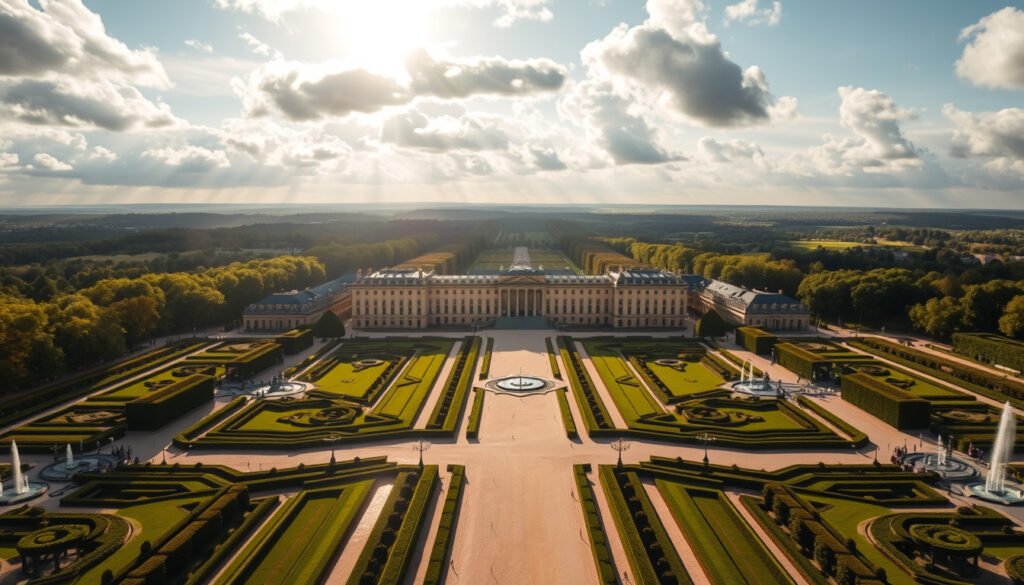
Louis Xiv – The Sun King Who Built Versailles and Ruled 72 Years
Louis XIV, known as the Sun King, ruled France for 72 years and forged the model of absolute monarchy in Europe. His reign transformed the nation’s culture, politics, and architecture, leaving behind the Palace of Versailles and a legacy that still fascinates historians and visitors alike. Born in 1638, he became king as a child and eventually turned the French crown into the most powerful institution in Europe.
Who Was Louis XIV? The Sun King of France
- Louis XIV is the longest-reigning sovereign monarch in recorded European history.
- He centralized absolute power in France by moving the nobility to Versailles, effectively controlling the aristocracy.
- His reign is historically divided into four distinct periods: the Regency (childhood), the Cardinal Mazarin era, the personal rule, and the decline.
- Despite his power, Louis XIV died unpopular due to costly wars and famine in his final years.
- The question “Why was he called the Sun King?” stems from his role as the central figure of France, just as the sun is central to the solar system.
| Fact | Detail |
|---|---|
| Born | 5 September 1638, Saint-Germain-en-Laye, France |
| Died | 1 September 1715, Palace of Versailles, France |
| Parents | Louis XIII of France and Anne of Austria |
| Spouse | Maria Theresa of Spain (first wife); Madame de Maintenon (second wife, morganatic) |
| Children (legitimate) | 6 children with Maria Theresa; only Louis, le Grand Dauphin survived to adulthood |
| Known for | Absolute monarchy, Palace of Versailles, Sun King iconography, longest reign in European history |
How Long Did Louis XIV Reign? The Longest in History
Louis XIV’s reign lasted 72 years and 110 days, the longest of any sovereign monarch in history, according to Wikipedia and World History Encyclopedia. He became king on 14 May 1643 at the age of four, after the death of his father Louis XIII. Because he was a child, his mother Anne of Austria served as regent, and Cardinal Mazarin handled state affairs until his death in 1661.
That year, 1661, marked the true beginning of Louis’s personal rule. He chose to govern without a chief minister, a major break with earlier practice. He presented himself as the direct representative of God on earth and centralized all decision-making in the crown. His reign is often called Le Grand Siècle (the Grand Century) in France, a period of cultural flourishing and territorial expansion.
When Did Louis XIV’s Reign Begin and End?
Legally, his reign began the moment his father died in 1643. But the period of effective personal rule started in 1661. He ruled until his death on 1 September 1715 at the Palace of Versailles. That span of 72 years and 110 days remains unmatched among sovereign monarchs in European history – a record confirmed by Britannica.
What Was the Reign of Louis XIV Called?
Historians refer to the entire era as Le Grand Siècle. It was a time when France became the dominant power in Europe, thanks in part to the efforts of finance minister Jean-Baptiste Colbert. The arts, architecture, and court culture reached new heights, especially the Baroque style that defined Versailles. The period also saw the expansion of French colonial territories overseas.
No sovereign monarch in European history has ever matched Louis XIV’s 72-year reign. The closest modern monarchs, such as Queen Elizabeth II (70 years) and King Bhumibol of Thailand, came close but did not surpass him.
Why Did Louis XIV Build the Palace of Versailles?
Louis XIV transformed a modest hunting lodge into the vast Palace of Versailles between 1661 and 1689. In 1682, he moved the royal court there permanently. The palace became the center of French political life and a visible symbol of royal power. According to the official Versailles website, the move was also a strategic political tool: by requiring the nobility to live at court, the king kept them under constant supervision and stripped them of their regional power bases.
How Much Did Versailles Cost Louis XIV?
Exact figures are difficult to pin down because the construction spanned decades and involved constant additions. Contemporary estimates suggest the total cost consumed a significant portion of the French treasury, though no precise modern equivalent exists. The financial strain contributed to the kingdom’s later difficulties, especially after the costly wars that followed.
What Was the Hall of Mirrors Used For?
The Hall of Mirrors, the most famous room in Versailles, served as a grand gallery for court ceremonies, balls, and diplomatic receptions. Its 357 mirrors, chandeliers, and painted ceiling were designed to dazzle visitors and reinforce the king’s absolute authority. It was also where the Treaty of Versailles was signed in 1919, ending World War I.
Who Was Louis XIV’s Brother Philippe and What Happened to Him?
Philippe, Duke of Orléans, was Louis XIV’s younger and only sibling. Born in 1640, he was known as Monsieur at court. He played a major role in court life and military campaigns, commanding French forces in the Franco-Dutch War. However, Louis XIV kept Philippe politically constrained, partly because of the king’s wariness of any rival power. Philippe died in 1701, survived by his children from two marriages.
Popular fiction links Philippe with the mysterious “Man in the Iron Mask,” claiming the prisoner was his twin brother. No historical evidence supports this. The real prisoner was likely a valet. The story remains a legend, not a fact.
His first wife was Maria Theresa of Spain, whom he married in 1660 for political reasons. After her death in 1683, he secretly married Françoise d’Aubigné, Marquise de Maintenon, in a morganatic ceremony – meaning she did not become queen. He had six legitimate children with Maria Theresa, but only one son survived to adulthood.
Timeline: The Life and Reign of Louis XIV
- 1638 – Louis XIV is born at Saint-Germain-en-Laye.
- 1643 – Becomes King of France at age 4 after his father’s death; mother Anne of Austria serves as regent.
- 1661 – Cardinal Mazarin dies; Louis XIV begins personal rule, ending the regency system.
- 1682 – The royal court formally moves to the Palace of Versailles.
- 1701-1714 – War of the Spanish Succession; drains French treasury and strengthens England.
- 1715 – Louis XIV dies of gangrene; his 5-year-old great-grandson Louis XV succeeds him.
Myths and Facts: Separating Certainty from Speculation
| Topic | Established Information | Uncertain / Speculative |
|---|---|---|
| The Sun King nickname origin | Historians unanimously agree Louis XIV adopted the sun as his emblem to represent his absolute centrality to the state. | No ambiguity – the evidence is clear from court records and iconography. |
| Date of birth vs reign start | Born 1638, crowned 1643. His reign technically began at birth from a legal standpoint, but real power started in 1661. | The legal vs. effective start is well documented; no dispute among historians. |
| Louis XIV and the Man in the Iron Mask | No historical evidence connects Louis XIV to the prisoner. The real prisoner was probably a valet. | Popular fiction ties the mask to his brother Philippe, but this is a myth with no supporting evidence. |
| Death cause | Gangrene in his leg, officially recorded by his physicians. No foul play suspected. | The details of the infection are well recorded; no speculation needed. |
What Was the Political and Cultural Legacy of Louis XIV?
Louis XIV’s transformation of a hunting lodge into Versailles was a deliberate political act. By forcing the nobility to live at court, he stripped them of regional power and kept them under surveillance, centralizing French governance. This system of absolutism became a model for other European monarchs.
Constant warfare – the Franco-Dutch War, the War of the League of Augsburg, and the War of the Spanish Succession – bankrupted France despite initial reforms by Colbert. This set the stage for the financial crises that erupted under Louis XVI. Culturally, Louis XIV made French language, etiquette, and art the standard for European courts. The Palace of Versailles remains one of the most visited monuments in the world, a testament to the grandeur of the Sun King’s ambition.
What Do Historical Sources Say About Louis XIV?
“The reign of Louis XIV is often referred to as ‘Le Grand Siècle’ and in 1682 he moved the royal Court to the Palace of Versailles.”
– en.chateauversailles.fr
“Louis XIV, king of France (1643–1715), ruled his country, principally from his great palace at Versailles, during one of the country’s most brilliant periods.”
– Britannica
“His reign of 72 years and 110 days remains the longest of any sovereign monarch in history.”
– Wikipedia
What Came After Louis XIV?
The French monarchy never recovered the financial stability lost under Louis XIV. His great-grandson Louis XV inherited a strained economy, leading directly to the fiscal crisis that triggered the French Revolution under Louis XVI. The age of absolute monarchy in France effectively ended with the Sun King. For a deeper look at the Sun King’s reign and absolutism, the primary sources provide extensive detail. The cultural imprint of Versailles and its era, often called the Versailles and the Grand Siècle, continues to attract historians and visitors alike.
Frequently Asked Questions
What is King Louis XIV whiskey?
A brand of luxury French whiskey named after Louis XIV. It is marketed as a premium spirit, though it has no direct historical connection to the king other than the branding.
What is the best Louis XIV movie?
Popular films include “The Man in the Iron Mask” (1998) and the French series “Versailles” (2015-2018). For documentary-style content, “Louis XIV: The Sun King” by PBS is also recommended.
How is Louis XIV related to Louis XVI?
Louis XIV was the great-grandfather of Louis XVI. Louis XV (son of the Duke of Burgundy) was the link between them.
Who succeeded Louis XIV?
His great-grandson, Louis XV, succeeded him at the age of 5 in 1715.
How many children did Louis XIV have?
He had six legitimate children with his first wife Maria Theresa. Only one son, Louis le Grand Dauphin, survived to adulthood. He also had several illegitimate children with his mistresses.
Why did Louis XIV revoke the Edict of Nantes?
He revoked it in 1685 to enforce religious uniformity. This intensified persecution of Huguenots and drove many skilled Protestants out of France, weakening the economy.
Where did Louis XIV die?
He died on 1 September 1715 at the Palace of Versailles, four days before his 77th birthday. The cause was gangrene in his leg.
What was the Fronde?
The Fronde (1648-1653) was a series of civil wars and uprisings in France. As a child, Louis XIV was forced to flee Paris, an experience that shaped his determination to centralize power and control the nobility.
Did Louis XIV have any siblings?
He had one younger brother, Philippe, Duke of Orléans. Philippe was a capable military commander but was kept politically marginalized by the king.
What is the difference between Louis XIV and Louis XVI?
Louis XIV was the great-grandfather of Louis XVI. Louis XIV built Versailles and embodied absolute monarchy. Louis XVI was executed during the French Revolution, which was partly triggered by the financial crisis inherited from his predecessors.
More related posts
 Cleaning Services Near Me – Detroit Metro Providers and Rates
 Laurent Mekies – From F1 Engineer to Red Bull Team Principal
 Cloudy With a Chance of Meatballs – Complete Franchise Guide 2025
 Don Toliver – Biography, Songs, Tour, Net Worth & More
 Kate Winslet – Age, Husband, Movies & Height Facts
 Camila Mendes – Biography, Age, Ethnicity, and Latest News
 Jack Skellington – Biography, Movies, Costumes, and Fun Facts
 Amanda Staveley – Who Is the British Businesswoman
