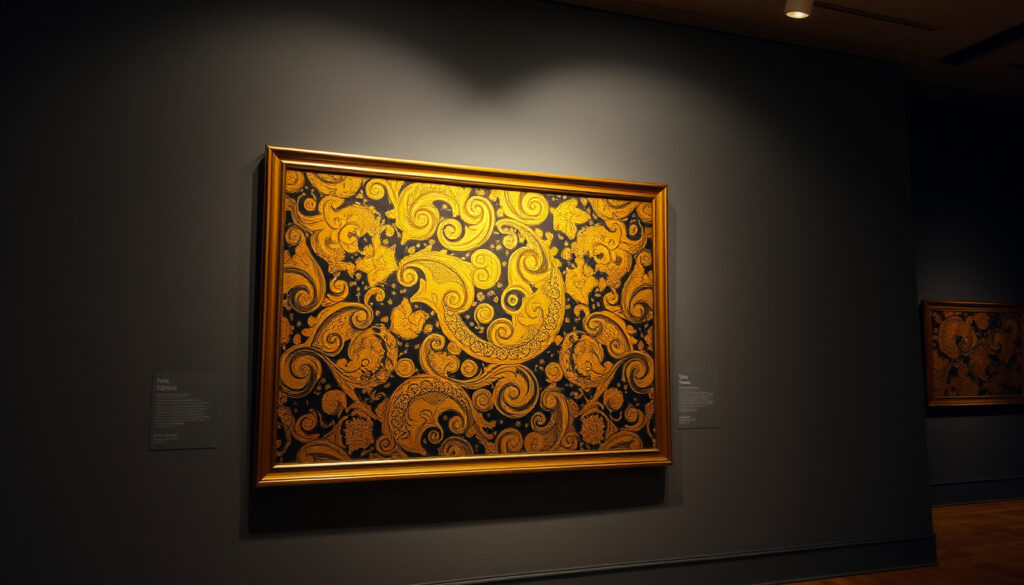
Gustav Klimt – Biography, Paintings and The Kiss
Gustav Klimt was an Austrian symbolist painter whose work in the late 19th and early 20th centuries transformed the Viennese art scene. Best known for his opulent “Golden Phase” and the iconic painting The Kiss, Klimt remains one of the most widely recognized figures of the Art Nouveau movement.
What Are Gustav Klimt’s Most Famous Paintings?
Gustav Klimt left behind a body of work that spans from academic murals to highly decorative, gold-laden masterpieces. His most celebrated paintings come from his later period, often referred to as his “Golden Phase.”
- The Kiss (1907–1908): Klimt’s most famous work, created with oil paint and gold, silver, and platinum leaf. It is housed at the Belvedere Museum in Vienna.
- Portrait of Adele Bloch-Bauer I (1907): A masterpiece of the Golden Phase, featuring extensive gold leaf and intricate patterning. Sold for $135 million in 2006.
- Judith I (1901): A transitional work that showcases Klimt’s shift toward erotic symbolism and flat, decorative surfaces.
- Beethoven Frieze (1902): A monumental mural created for the Vienna Secession exhibition, interpreting Richard Wagner’s interpretation of Beethoven’s Ninth Symphony.
- Stoclet Frieze (1905–1911): A series of mosaics created for a private Brussels mansion, considered a peak of his decorative style.
- Pallas Athena (1898): A key work marking Klimt’s turn away from academic classicism toward symbolist and modern themes.
| Fact | Detail |
|---|---|
| Full Name | Gustav Klimt |
| Born | 14 July 1862, Baumgarten, Austrian Empire |
| Died | 6 February 1918, Vienna, Austria-Hungary |
| Cause of Death | Stroke (cerebral hemorrhage) followed by pneumonia |
| Notable Movement | Vienna Secession (co-founder) |
| Famous Works | The Kiss, Portrait of Adele Bloch-Bauer I, Judith and the Head of Holofernes, Beethoven Frieze |
| Style | Symbolism, Art Nouveau, decorative gold leaf |
| Partner | Emilie Flöge (lifelong companion, not legally married) |
| Children | 14 (acknowledged) |
| Museum | Belvedere Palace, Vienna (holds The Kiss); Klimt Villa; Leopold Museum |
Klimt’s “Golden Phase” was directly influenced by Byzantine mosaics he saw in Ravenna, Italy. His use of gold leaf, silver, and platinum created a luminous, mosaic-like surface that became his signature.
How Did Gustav Klimt Die and What Defined His Artistic Life?
What Is Gustav Klimt’s Style?
Klimt’s mature style is highly decorative, characterized by rich patterning, flat surfaces, symbolic imagery, and frequent erotic themes. Sources including Britannica describe his work as combining flat decoration with gold leaf and erotic symbolism. His style was heavily influenced by Japanese art and later by Byzantine mosaics.
Who Was Gustav Klimt’s Wife?
Gustav Klimt never married. His lifelong companion was Emilie Flöge, a Viennese fashion designer. Although they were partners, they never lived together permanently, and the exact nature of their relationship is described by sources like Wikipedia as complex and not fully understood. Klimt fathered at least 14 children with various women, though he acknowledged only a few.
What Were Gustav Klimt’s Early Works?
Klimt’s early training was in the applied arts at the Vienna School of Arts and Crafts. He initially worked in a conventional academic style on murals and decorative commissions for public buildings such as the Burgtheater and the Kunsthistorisches Museum. Around 1897, he became a founding member and the first president of the Vienna Secession, a breakaway group that rejected academic conservatism and promoted modern, international art.
Some sources incorrectly link Klimt’s death directly to the 1918 Spanish flu pandemic. Medical records confirm he died of a stroke (cerebral hemorrhage) and subsequent pneumonia on February 6, 1918, months before the flu pandemic peaked in Austria.
What Books About Gustav Klimt Are Available?
Several authoritative biographies and resources focus on different aspects of Klimt’s life and work. The most useful books and museum resources cover his leadership of the Vienna Secession and break with academic art, his Golden Phase and use of gold leaf, and the symbolism and eroticism of works like Judith I and The Kiss. For those interested in provenance, the conservation and museum history of major works such as The Kiss and Portrait of Adele Bloch-Bauer I are well documented by institutions like the Belvedere Museum.
The Klimt Foundation continues to authenticate and research his works, with occasional new attributions. Several museums, including the Belvedere and the Klimt Villa in Vienna, offer permanent and rotating exhibitions.
For a comprehensive overview, begin with the online resources of the Belvedere Museum and the Klimt Foundation. They offer authoritative, research-based information on both his life and his artistic legacy.
Timeline of Gustav Klimt’s Life and Career
- 1862: Born in Baumgarten, Austria.
- 1876: Enrolled at the Vienna School of Arts and Crafts.
- 1888: Received the Golden Order of Merit for his mural work.
- 1897: Co-founded the Vienna Secession movement.
- 1902: Completed the Beethoven Frieze.
- 1907: Painted The Kiss (finished 1908).
- 1918: Died of a stroke in Vienna; his final work, The Bride, was left unfinished.
Certainty and Uncertainty: What Is Known and What Is Not
| Established Information | Information That Remains Unclear |
|---|---|
| Klimt died of a stroke (cerebral hemorrhage) on February 6, 1918, followed by pneumonia. | The exact role of the 1918 flu pandemic in his death is debated; some sources note he may have contracted a lung infection during his recovery. |
| He never married but had a lifelong companion, Emilie Flöge. | The precise nature of his relationship with Flöge and the full extent of his romantic life remain subjects of scholarly debate. |
| His most famous works belong to his “Golden Phase” (c. 1900–1910). | The exact number of studies and preparatory works he completed before his final paintings is not fully documented. |
The Context of Klimt’s Work: Why It Matters
Klimt’s work was controversial in its time. His open eroticism and departure from traditional academic painting drew sharp criticism from conservative circles. As a leading figure of the Vienna Secession, he rejected historicism in favor of modern, decorative art. The Nazi plunder of Klimt’s works, especially the paintings of Adele Bloch-Bauer, later became a powerful symbol of art restitution after World War II. His influence on later artists and his role in the development of modern art remain subjects of ongoing study by institutions like the Klimt Foundation.
Sources and Key Quotes on Gustav Klimt
“I am convinced that I am not particularly interesting as a person. There is nothing special about me.”
— Gustav Klimt, in a letter to Emilie Flöge
“Klimt was an Austrian painter and a founder of the Vienna Sezession.”
— Britannica
“He is known for his paintings, murals, sketches, and other objets d’art, often with an erotic, allegorical, or symbolic theme.”
— Wikipedia
Final Summary: What Should You Remember About Gustav Klimt?
Gustav Klimt was a revolutionary artist who broke from academic traditions to create a deeply personal, decorative, and symbolist style. His Golden Phase produced some of the most recognizable paintings in the world, including The Kiss and Portrait of Adele Bloch-Bauer I. He died in 1918 from a stroke, leaving behind a legacy of eroticism, ornamentation, and artistic freedom that continues to influence contemporary art. For a broader view of historical figures who shaped their eras, you may also be interested in the biography of Louis XIV or the architectural innovations of Frank Lloyd Wright.
Frequently Asked Questions About Gustav Klimt
When was Gustav Klimt born?
14 July 1862 in Baumgarten, Austrian Empire.
What movement is Gustav Klimt associated with?
The Vienna Secession, an art movement that broke from academic traditions and embraced modern, decorative styles like Art Nouveau.
Where can I see The Kiss in person?
The Kiss is permanently housed at the Belvedere Palace Museum in Vienna, Austria.
Did Gustav Klimt have any official art training?
Yes, he studied at the Vienna School of Arts and Crafts from 1876 to 1883.
What is the value of Gustav Klimt’s paintings?
His works have sold for tens of millions of dollars. Portrait of Adele Bloch-Bauer I sold for $135 million in 2006, one of the highest prices for a painting at that time.
Were any of Klimt’s works destroyed?
Yes. His 1894 Philosophy, Medicine, and Jurisprudence murals were destroyed by the Nazis in 1945. They survive only in black-and-white photographs.
More related posts
 Megyn Kelly – Age, Husband, Net Worth, and Show in 2025
 Ben Fogle – Biography, Family, Books and TV Career
 Sabre Gladiator – Real Name, Age, Partner and Biography
 Hotels Near Tottenham Stadium – Closest Picks and Transport Tips
 Coral Reef – Waterworld Tickets and Ecosystem Guide
 Dana Delany – Age, Net Worth, Movies and TV Shows in 2025
 La Boo Boo Doll – Authentic UK Buying Guide
 Cookie Monster – Complete Guide to the Beloved Blue Monster
