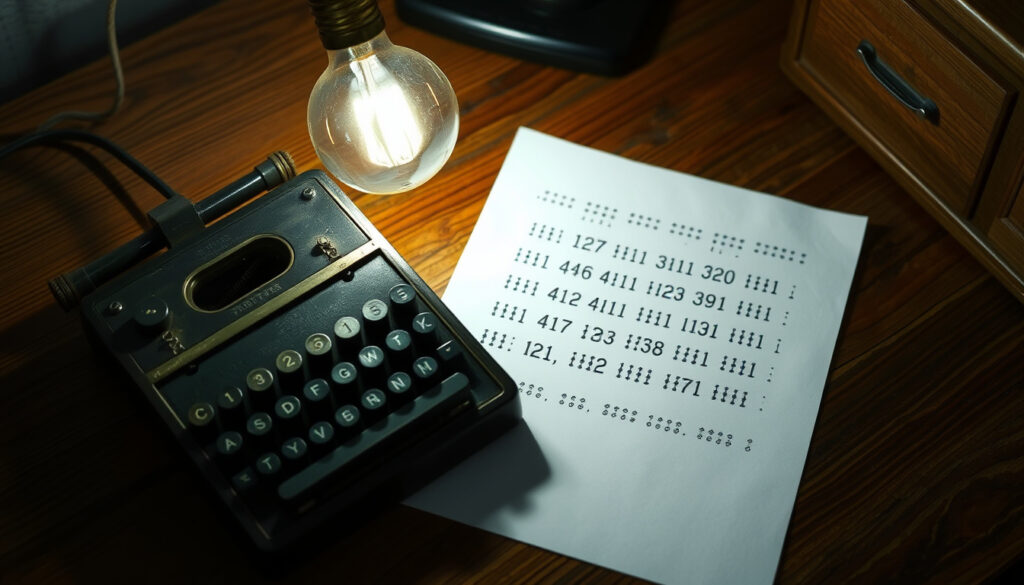
Morse Code – Complete Alphabet, Translator, and Learning Guide
Morse code is a signal-based alphabet that represents letters, numbers, and punctuation with short and long elements called dots and dashes. A dot is also known as a dit, and a dash is also called a dah. Developed in the 1830s by Samuel F. B. Morse and Alfred Vail, it became the foundation of early long-distance communication.
Today, Morse code is no longer a primary telecommunication tool, but it remains a valuable skill for amateur radio operators, survivalists, and digital historians. Its simplicity allows it to be transmitted through sound, light flashes, or vibration, making it an exceptionally reliable fallback when modern systems fail.
Understanding Morse code begins with grasping its structure—the alphabet, numbers, and spacing rules. Modern translation tools make it easy to convert text into dots and dashes instantly, and practical learning methods help build fluency. For many, the most important sequence to master is the emergency signal SOS.
How to Translate Morse Code: Tools and Techniques
Modern translation tools make it easy to convert text into dots and dashes. Many platforms offer instant audio playback, which is essential for learning the characteristic rhythm of the code. Interactive tools like morsecode.world allow you to type a full sentence and hear or see its Morse equivalent.
Typing a full sentence using a Morse code translator is straightforward. The text is encoded according to standard timing rules. A dash lasts approximately three times as long as a dot, and precise spacing between letters and words is necessary for accurate decoding.
Key Insights About Morse Code
- Morse code is a binary encoding system using dots and dashes to represent letters and numbers.
- The SOS signal (… — …) is one of the most universally recognized emergency signals.
- Interactive translators provide instant encoding, decoding, and audio playback.
- Spacing rules are critical: 1 unit inside a letter, 3 units between letters, 7 between words.
- Learning Morse code is most effective with mnemonic aids and audio repetition.
- International Morse Code is the modern global standard.
Key Facts About Morse Code
| Fact | Detail |
|---|---|
| Invented | 1830s-1840s by Samuel Morse and Alfred Vail |
| Standard | International Morse Code (ITU-R M.1677-1) |
| Structure | Short signal (dot) and long signal (dash) |
| Common usage | Telegraphy, aviation, amateur radio, emergency signaling |
| Basic proficiency | Achievable in roughly 4 to 8 weeks with daily practice |
| Dash length | A dash lasts about three times as long as a dot |
| Letter spacing | Pause of three units between letters |
| Word spacing | Pause of seven units between words |
| Encoding medium | Can be sent via light, sound, or electrical impulses |
What Is the Morse Code Alphabet and Number System?
Morse code assigns each letter of the English alphabet a unique sequence of dots and dashes. Understanding the structure is the first step toward fluent reading and sending.
The Structure of the Morse Code Alphabet
The code for each letter varies in length. The simplest letters, E and T, consist of just a single dot and a single dash, respectively. More complex letters, such as Q or Y, require longer sequences. The standard is defined by the International Telecommunication Union in recommendation ITU-R M.1677-1.
Numbers 0 to 9 in Morse Code
Numbers are represented by patterns five elements long. For example, 1 is • — — — — and 0 is — — — — —. Full mastery of Morse code typically includes all 10 digits alongside the 26 letters.
Punctuation and Additional Symbols
The standard International Morse Code also includes common punctuation marks such as the period (•—•—•—), the comma (—•—•— —), and the question mark (••— —••). These symbols are part of the full ITU standard and enable the transmission of complete sentences.
Many guides recommend beginning with the simplest characters: E (•) and T (—). After these, high-frequency letters like A, N, I, S, and O are often prioritized because they appear so frequently in English words.
For a similar reference-style guide covering an extensive list of entities, see our Harry Potter Characters – The Complete A-Z List and Name Guide.
How to Learn Morse Code Quickly and Effectively
Effective learning relies on consistent practice and sound training. Most methods emphasize rhythm over visual memorization. The educational team at BBC Bitesize provides a strong foundation for this approach.
Sound-First Learning vs. Visual Memory
Learning by sound trains the ear to recognize dits and dahs directly, which is much faster than converting visual symbols into sound. Many experts argue that this is the core skill for reaching higher speeds.
The Koch Method and Farnsworth Timing
The Koch method involves starting with a few characters at full speed and adding new ones only when proficiency reaches 90 percent. Farnsworth timing keeps characters at normal speed but increases the gap between them for beginners. Both methods are widely used in amateur radio training.
Mnemonic cues can help in the early stages. Associating a rhythm with a spoken sound, such as recognizing A (• —) as “dit-dah,” builds a bridge between the ear and the code. The Caesar Cipher guide offers a detailed comparison of effective learning methods.
Building a Practice Routine
Short, daily sessions of 10 to 30 minutes are more effective than long, infrequent ones. Progress is often measured in words per minute (WPM), with 5 WPM being a common beginner target.
How to Signal for Help Using Morse Code Light Flashes
Morse code transmitted by light flashes uses the exact same encoding as audio. A short flash represents a dot, and a long flash represents a dash. The universal distress signal, SOS, is one of the most practical sequences to memorize. Its rhythm—three dots, three dashes, three dots (••• ——— •••)—is designed to be unmistakable even under stressful conditions.
SOS is recognized globally. While older distress calls such as CQD existed historically, SOS is the current international standard. Learning this sequence first can be a life-saving skill in outdoor or survival situations.
Space is critical. Between letters in a word, the transmitter should pause for the length of a dash. Between words, pause for the length of seven dots. In the dark or using a flashlight, steady rhythm is more important than perfect timing.
Is Morse Code Still Used Today?
Morse code has largely been replaced by digital communication, but it maintains a dedicated following. The timeline provided by Wikipedia illustrates its long history:
- 1836: Samuel Morse demonstrates the telegraph system.
- 1844: The first public message, “What hath God wrought?”, is sent.
- 1865: International Morse Code is standardized.
- 1999: SOS is officially replaced by the Global Maritime Distress and Safety System (GMDSS) as the maritime distress standard.
- 2024: Morse code remains a licensed amateur radio requirement in many countries and is used in assistive technology.
Morse Code: Certainty vs. Misconceptions
While Morse code is often perceived as a single, unchanging system, different versions existed historically. American Morse code, for example, used different spacing rules than the modern International version. Today, the ITU standard is universally accepted.
| Aspect | Status | Details |
|---|---|---|
| Universal understanding | High Certainty | International Morse Code is globally recognized. |
| SOS is … — … | Certain | This is the standard distress signal. |
| Speed of learning | Variable | Depends heavily on practice; 5 WPM is a common first goal. |
| Audio vs. light | Same code | The encoding is identical; only the medium differs. |
Morse Code in the Modern World
Morse code has evolved from a primary telecommunication method into a niche skill valued by amateur radio operators, survivalists, and digital historians. While commercial use has declined, its simplicity and reliability make it ideal for low-bandwidth emergency situations. The American Radio Relay League continues to promote Morse code proficiency among its members. Similarly, the ability to decode signals manually remains a requirement for certain amateur radio licenses internationally.
Understanding the legal context of emergency contacts can be found in our guide on Next of Kin – Legal Meaning Usage and TV Series Guide.
Credible Sources and Perspectives on Morse Code
“Morse code is a telecommunications method which encodes text characters as standardized sequences of two different signal durations, called dots and dashes.”
— Wikipedia
“Morse code is a method of encoding words that was invented in the 19th Century as a way of transmitting messages over long distances.”
— BBC Bitesize
“International Morse code recommendation ITU-R M.1677-1.”
— International Telecommunication Union (ITU)
What’s Next for Morse Code?
Morse code continues to find new life in unexpected areas. Integration with AI voice assistants for real-time translation, continued use in accessibility technology, and growing interest in survival prepping and vintage radio restoration suggest the code will persist far beyond its telegraph origins.
Frequently Asked Questions About Morse Code
How do you tap Morse code with your fingers?
Tap a short rhythm for a dot and a slightly longer pause for a dash. Consistency in timing is key for clear communication.
Is there a difference between American and International Morse code?
Yes. American Morse code used a different set of spacing rules. International Morse code is the global standard today.
Can you use Morse code without a machine?
Yes. You can use a flashlight, mirror, tapping, or even blinking to send signals. The encoding remains the same regardless of the medium.
How does a Morse code machine work?
Traditional telegraph machines use an electromagnet to move a stylus or produce a clicking sound corresponding to the electrical signal pattern sent down a wire.
How fast can you send Morse code?
Beginner speeds are often around 5 words per minute. Experienced operators can exceed 20 WPM. Speed depends on practice and learning method.
How long does it take to learn Morse code?
Basic proficiency can be achieved in roughly 4 to 8 weeks with consistent daily practice of short sessions.
What is the best way to practice Morse code?
Methods like the Koch method and Farnsworth timing are highly effective. Short, daily sessions, ideally 10 to 30 minutes, offer the best results.
More related posts
 Ronan Farrow – Biography, Husband and Paternity Rumors
 Marianne Faithfull – Cause of Death, Net Worth, and Iconic Songs
 5ft 2 in cm – Precise Conversion to 157.48 Centimeters
 Adam Ants – Real Name, Age, Net Worth and 2025 Tour
 Stephen Graham – Biography, Wife, Ethnicity, Movies and Upcoming Projects
 Cast of the Wheel of Time (TV Series) – Full List by Season
 Nature Spell Rosemary Oil – Benefits, Usage and Hair Growth Guide
 Things to Do Today – Free Parks and Playgrounds in Atlanta
