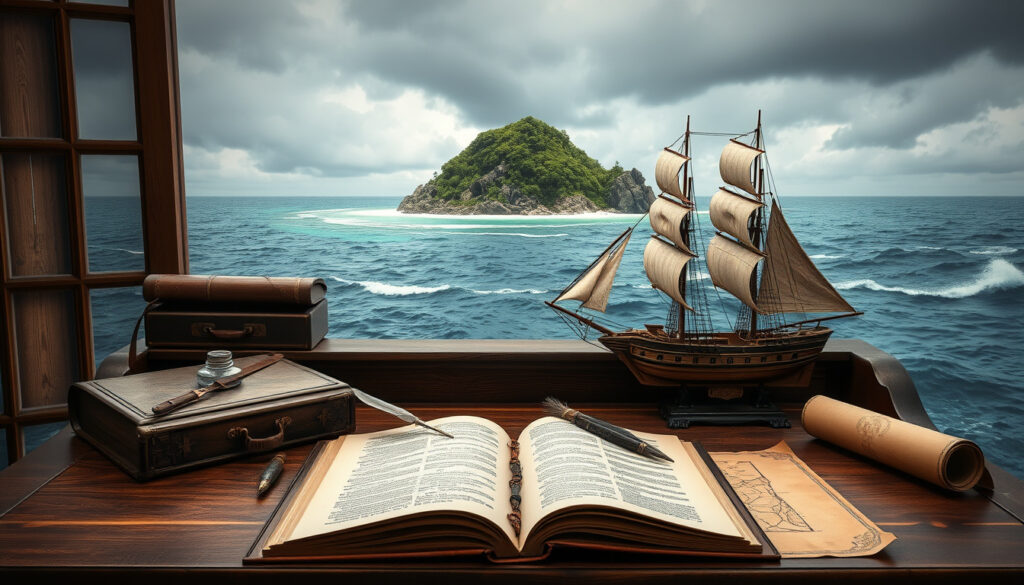
Robert Louis Stevenson – Biography, Works, Death Cause and Quotes
Robert Louis Stevenson was a Scottish novelist, poet, essayist, and travel writer whose works like Treasure Island and The Strange Case of Dr. Jekyll and Mr. Hyde have become cornerstones of English literature. Born in Edinburgh in 1850, he struggled with chronic ill health throughout his life but produced a remarkable body of work that continues to captivate readers worldwide. He died suddenly in Samoa in 1894 at the age of 44.
Stevenson’s journey from a frail child expected to become a lighthouse engineer to one of the most celebrated authors of the Victorian era is a story of determination and creative genius. His adventures across Europe and the South Pacific shaped his writing, while his exploration of human duality in Dr. Jekyll and Mr. Hyde secured his place in literary history.
Today, Stevenson is remembered not only for his thrilling adventure stories but also for his poetry, his essays, and his deep engagement with the cultures he encountered. His legacy endures through countless adaptations, museum exhibits, and the enduring popularity of his most famous characters.
Who Was Robert Louis Stevenson?
Robert Louis Stevenson was born Robert Lewis Balfour Stevenson on 13 November 1850 in Edinburgh, Scotland. His father, Thomas Stevenson, was a lighthouse engineer, and his mother was Margaret Balfour Stevenson. A frail child, he suffered from poor health throughout his life, including tuberculosis or other chronic respiratory illness, according to multiple accounts.
Stevenson prepared for a law career at the University of Edinburgh but never practiced. Instead, he turned to writing and travel, two passions that defined his life. He married Fanny Van de Grift Osbourne in 1880 after meeting her in 1876, and the couple eventually settled in Samoa, where Stevenson became known as “Tusitala” (teller of tales).
Key Insights into His Life and Work
- Stevenson defied his family’s expectations of a lighthouse engineering career to become a writer, despite chronic ill health.
- His most famous novel, Strange Case of Dr Jekyll and Mr Hyde, was reportedly written in a fever dream and published to instant success.
- He spent his final years in Samoa, where he was known as ’Tusitala’ (teller of tales) and became deeply involved in local politics.
- Although known for adventure stories, Stevenson was a serious literary stylist who influenced modernism and writers like Jorge Luis Borges and Vladimir Nabokov.
- His travels shaped much of his work, including Travels with a Donkey in the Cévennes and his later residence in the South Pacific.
- Stevenson prepared for a law career but did not practice, turning instead to writing and travel.
Snapshot Facts: Robert Louis Stevenson
| Fact | Detail |
|---|---|
| Birth | 13 November 1850, Edinburgh, Scotland |
| Death | 3 December 1894, Vailima, Samoa (age 44) |
| Cause of Death | Probable cerebral hemorrhage / stroke |
| Nationality | Scottish |
| Spouse | Fanny Van de Grift Osbourne (m. 1880) |
| Children | Stepchildren (Isobel, Lloyd), no biological children |
| Key Genres | Adventure fiction, horror, poetry, travel writing, essays |
| Major Works | Treasure Island (1883), The Strange Case of Dr Jekyll and Mr Hyde (1886), A Child’s Garden of Verses (1885), Kidnapped (1886) |
What Is Robert Louis Stevenson Best Known For?
Stevenson is best known for two landmark works: the pirate adventure novel Treasure Island (1883) and the psychological horror novella The Strange Case of Dr. Jekyll and Mr. Hyde (1886). Together, these books cemented his reputation as a master of both adventure and psychological fiction. He also wrote poetry, including the beloved collection A Child’s Garden of Verses (1885), and historical novels like Kidnapped (1886).
Treasure Island (1883)
Treasure Island is a pirate adventure novel and is widely regarded as one of Stevenson’s signature works. It first brought him major success and remains a classic of adventure fiction. The novel is associated with archetypal pirate figures in popular culture, including buried treasure, maps, mutiny, and seafaring adventure.
The Strange Case of Dr. Jekyll and Mr. Hyde (1886)
The Strange Case of Dr. Jekyll and Mr. Hyde was published in 1886 and became one of Stevenson’s most famous works. The story is commonly understood as an exploration of the duality of human nature, with a respectable doctor and a darker alter ego. Contemporary summaries note that it made Stevenson famous on both sides of the Atlantic.
Other Major Works
Stevenson’s literary output extended far beyond his two most famous titles. He wrote fiction, poetry, essays, and travel writing. Among his notable works are Travels with a Donkey in the Cévennes (1879), a travelogue; Virginibus Puerisque (1881), a collection of essays; and The Master of Ballantrae (1889), another major novel. He also wrote a significant amount of poetry, including A Child’s Garden of Verses (1885), one of his best-known poetic works.
For readers looking to explore beyond Jekyll and Hyde and Treasure Island, Kidnapped (1886) offers a gripping historical adventure set in the aftermath of the Jacobite rising, while The Master of Ballantrae (1889) is a darker, more complex tale of sibling rivalry.
According to Britannica, Stevenson’s range extended across fiction, poetry, essays, and travel writing. The Poetry Foundation likewise highlights his stature as both poet and prose writer, a breadth of talent also emphasized by the National Endowment for the Humanities.
What Are Robert Louis Stevenson’s Most Famous Poems and Quotes?
Stevenson’s most famous poem is A Child’s Garden of Verses (1885), a major poetry collection for children that has remained in print for over a century. The collection includes gentle, evocative verses about childhood, nature, and imagination. The Poetry Foundation identifies him as a poet as well as a prose writer.
Several lines from Stevenson’s work are frequently quoted, though some attributions are debated. A well-known quote often attributed to him is: “We are all travelers in the wilderness of this world, and the best we can find in our travels is an honest friend.” Another frequently cited line from A Child’s Garden of Verses is: “The world is so full of a number of things, I’m sure we should all be as happy as kings.” A third quote sometimes attributed to Stevenson reads: “Quiet minds cannot be perplexed or frightened but go on in fortune or misfortune at their own private pace, like a clock during a thunderstorm.” The exact source of this last quote is debated.
Some of Stevenson’s most popular quotes are frequently shared on platforms like Goodreads, but their exact origins within his published works are not always clear from available sources. Readers should verify quotes against primary texts for scholarly use.
What Caused Robert Louis Stevenson’s Death?
Stevenson died suddenly on 3 December 1894 in Vailima, Samoa, at age 44. Available sources offer differing accounts of the cause. Britannica’s summary notes that his tuberculosis would “eventually cause his death.” The National Endowment for the Humanities reports that he collapsed and died of a brain hemorrhage.
Taken together, these accounts suggest Stevenson had long-standing ill health, including tuberculosis, and his immediate cause of death was reported as a brain hemorrhage. No advanced diagnostics were possible at the time, so the precise sequence of events remains a matter of historical conjecture.
The exact cause of Stevenson’s death remains somewhat uncertain. While the consensus view points to a probable stroke or cerebral hemorrhage, the lack of modern medical diagnostics at the time means that some ambiguity persists in the historical record.
Where Did Robert Louis Stevenson Die? How Old Was He?
Stevenson died in Vailima, Samoa, on 3 December 1894. He was 44 years old at the time of his death. He is buried on Mount Vaea, overlooking the sea, a site that remains a place of pilgrimage for literary enthusiasts.
Timeline of Key Events in Robert Louis Stevenson’s Life
- 1850: Born in Edinburgh to Thomas Stevenson and Margaret Balfour.
- 1867: Enrolls at University of Edinburgh to study engineering, then law.
- 1875: Called to the Scottish bar but never practices; begins writing essays and travelogues.
- 1879: Travels to California to marry Fanny Van de Grift Osbourne.
- 1883: Publishes Treasure Island, his first major success.
- 1885: Publishes A Child’s Garden of Verses.
- 1886: Publishes Strange Case of Dr Jekyll and Mr Hyde and Kidnapped.
- 1888: Leaves San Francisco for South Seas travels.
- 1890: Settles in Vailima, Samoa.
- 1894: Dies suddenly on 3 December; buried on Mount Vaea, Samoa.
What Is Certain and What Remains Unclear About Stevenson’s Life?
| Topic | Established Information | Information That Remains Unclear |
|---|---|---|
| Cause of Death | He died suddenly after a suspected stroke or cerebral hemorrhage. This is the consensus view. | No advanced diagnostics were possible at the time. The exact sequence of medical events is not fully known. |
| His marriage to Fanny Van de Grift | The factual record shows they met in 1876 and married in 1880, remaining married until his death. | Some biographers suggest the marriage was strained; others depict it as a genuine partnership. The emotional dynamics are debated. |
| His religious views | Stevenson was raised Calvinist but publicly rebelled against organized religion. | His private letters show a complex, shifting spiritual outlook that scholars continue to analyze. |
Why Does Robert Louis Stevenson Still Matter?
Stevenson’s work bridges Victorian adventure fiction and psychological horror, anticipating modern genre blending. The Strange Case of Dr. Jekyll and Mr. Hyde remains one of the most adapted stories in film history, with over 120 film versions. His time in Samoa represents a rare example of a European writer engaging seriously with Pacific Island culture and anti-colonial politics.
Stevenson’s influence extends to writers as diverse as Jorge Luis Borges and Vladimir Nabokov, both of whom admired his literary craftsmanship. His poetry continues to be read by children and adults alike, while his adventure stories remain staples of school curricula around the world. The Wikipedia biography provides a comprehensive overview of his lasting impact.
What Are the Best Sources for Reliable Information About Robert Louis Stevenson?
For authoritative information, several trusted sources stand out. The Britannica entry offers a scholarly yet accessible overview of his life and works. The Wikipedia page provides a comprehensive, well-cited biography filled with detail on his literary career. The Poetry Foundation is an excellent resource for his poetic works and analysis. Readers interested in his most frequently shared quotes can explore the large collection on Goodreads, though verifying quotes against primary texts is recommended for scholarly use. Project Gutenberg provides free access to the majority of Stevenson’s published works in the public domain.
“We are all travelers in the wilderness of this world, and the best we can find in our travels is an honest friend.”
— Attributed to Robert Louis Stevenson (frequently cited on Goodreads)
“The world is so full of a number of things, I’m sure we should all be as happy as kings.”
— From A Child’s Garden of Verses, 1885
Summary: Who Was Robert Louis Stevenson?
Robert Louis Stevenson was a Scottish novelist, poet, essayist, and travel writer who lived from 1850 to 1894. He is best known for Treasure Island, The Strange Case of Dr. Jekyll and Mr. Hyde, and A Child’s Garden of Verses. Despite lifelong health struggles, he produced a remarkable body of work that continues to influence literature and popular culture. His final years in Samoa marked a unique chapter in literary history, where he engaged deeply with local culture and politics. For more biographical guides on famous creative figures, see this article on Frank Lloyd Wright – Life, Buildings and Complete Legacy.
Frequently Asked Questions About Robert Louis Stevenson
Did Robert Louis Stevenson have children?
No, Stevenson did not have biological children. He was a devoted stepfather to his wife Fanny’s two children, Isobel and Lloyd Osbourne.
How many books did Robert Louis Stevenson write?
Stevenson wrote over 30 major works including novels, short story collections, poetry volumes, travel books, and essays.
Why did Robert Louis Stevenson move to Samoa?
Stevenson traveled the South Pacific for his health and fell in love with Samoa. He settled there in 1890, building a home in Vailima and becoming a respected local figure.
Was Robert Louis Stevenson Scottish or American?
Stevenson was Scottish. He was born in Edinburgh and identified as Scottish. He traveled widely but never renounced his British nationality.
What was Stevenson’s childhood like?
Stevenson was a frail child who suffered from poor health throughout his life, including tuberculosis or other chronic respiratory illness.
What influenced Robert Louis Stevenson’s writing?
His travels shaped much of his work, including his journeys through Europe and his later residence in the South Pacific.
Where is Robert Louis Stevenson buried?
He is buried on Mount Vaea, overlooking the sea in Samoa, where his grave remains a place of pilgrimage for literary enthusiasts.
What are Stevenson’s best books beyond Jekyll and Hyde?
Beyond his most famous works, notable titles include Kidnapped (1886), The Master of Ballantrae (1889), and Travels with a Donkey in the Cévennes (1879).
Did Stevenson write for children?
Yes, his poetry collection A Child’s Garden of Verses (1885) is a major work for children, and Treasure Island is widely read by younger audiences.
How many film adaptations of Jekyll and Hyde exist?
The story has been adapted into over 120 films, making it one of the most frequently adapted stories in cinema history.
More related posts
 Dave Lee Travis – Biography, Conviction and Trial Details
 Siberian Cat – Hypoallergenic, Price UK, Size and Temperament Guide
 Amanda Staveley – Who Is the British Businesswoman
 Lemsip Cold and Flu – Capsules, Sachets, Dosages and Warnings
 Stephen Graham – Biography, Wife, Ethnicity, Movies and Upcoming Projects
 Wrexham vs Blackburn Rovers – Score, Goals and Match Report
 Luton Airport Drop Off Pay Online – How To Pay And Avoid Fines
 Kin Season 3 Release Date – Latest Updates on Renewal Status
