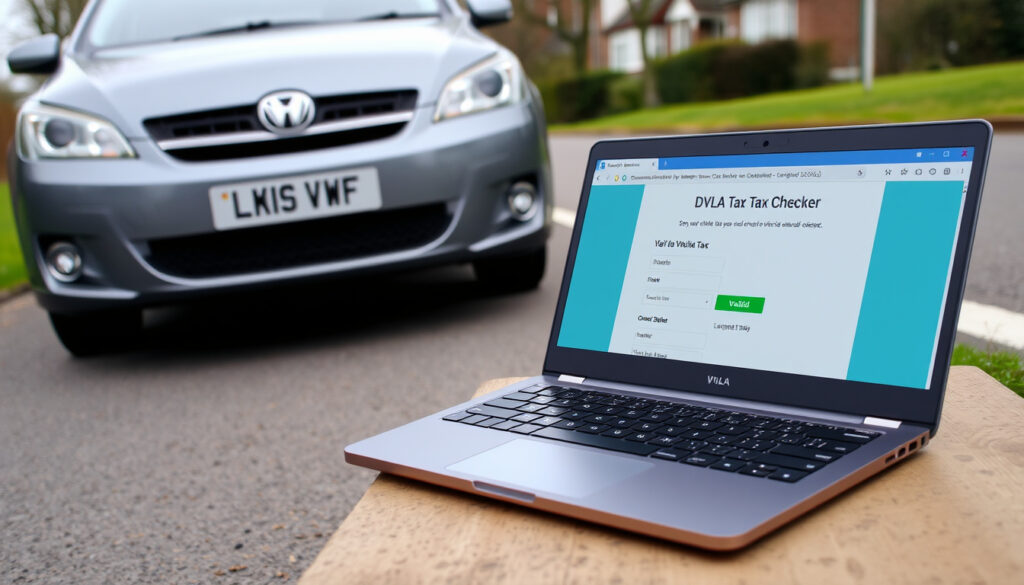
Check If a Car Is Taxed – Official DVLA Guide
Knowing how to check if a car is taxed is essential for any UK driver or used car buyer. The Driver and Vehicle Licensing Agency (DVLA) provides free online tools that allow anyone to verify a vehicle’s tax status using just the registration number. These checks take seconds and could save you from fines exceeding £1,000.
Whether you are buying a second-hand vehicle, renewing your own tax, or simply verifying compliance before a journey, the official GOV.UK checkers provide real-time data direct from DVLA records. This guide explains exactly how to use these tools and what the results mean for your situation.
Vehicle Excise Duty (VED), commonly called road tax or car tax, applies to all vehicles used or parked on public roads. The tax does not transfer when a vehicle changes hands, meaning new keepers must tax any car immediately after purchase. Failure to do so results in automatic enforcement action.
How Do I Check if a Car Is Taxed Online?
The most reliable way to verify tax status is through the official DVLA vehicle tax check available on GOV.UK. This service draws directly from DVLA records and provides instant, accurate information about whether a vehicle is currently taxed, untaxed, or declared off-road with a SORN (Statutory Off Road Notification).
DVLA Vehicle Tax Check (free, instant)
Registration number only
Shows current status + expiry
Avoid £1,000+ fines
Key Insights on Vehicle Tax Checks
- The DVLA online tool provides 100% accurate information sourced directly from official records
- Automatic Number Plate Recognition (ANPR) cameras automatically detect untaxed vehicles on roads
- Used car buyers should always verify tax status before completing a purchase
- The service is completely free and requires no login or account creation
- The same checker also reveals SORN declarations and can be used alongside MOT verification
- Results reflect DVLA data that updates within 2 working days of any tax application
Comparison of Verification Methods
| Method | Cost | Accuracy | Time |
|---|---|---|---|
| DVLA Online Check | Free | Official | Seconds |
| MOT History Check | Free | Supportive | Minutes |
| Seller Declaration | Free | Self-reported | Instant |
Enter the registration number at GOV.UK check vehicle tax to see instantly whether a car is taxed, untaxed, or has a SORN declaration. The service works for all UK-registered vehicles including cars, vans, and motorcycles.
How to Check Car Tax by Registration Number
Checking car tax status requires only one piece of information: the vehicle’s registration number. No ownership proof or personal details are needed, making it accessible for anyone to verify any UK-registered vehicle.
Step-by-Step Process
- Locate the vehicle’s registration number (found on the number plate, V5C logbook, or MOT certificate)
- Visit the official DVLA vehicle tax check page at gov.uk/check-vehicle-tax
- Enter the full registration number including any spaces
- Review the displayed status showing taxed, untaxed, or SORN
- Note the expiry date if the vehicle appears taxed
What the Results Mean
The DVLA checker returns one of three possible statuses. “Taxed” indicates the vehicle has active Vehicle Excise Duty and may be driven on public roads. “Untaxed” means no current tax exists and the vehicle cannot be legally driven or parked on public roads. “SORN” confirms the keeper has declared the vehicle off-road, which exempts it from tax but only while the vehicle remains off public roads.
Records typically update within 2 working days after any taxing or SORN application is processed by DVLA. If you have recently renewed tax, waiting this period before rechecking ensures accuracy.
What Happens If a Car Is Not Taxed?
Driving or keeping an untaxed vehicle on public roads constitutes a criminal offence under the Vehicle Excise and Registration Act 1994. Enforcement is automatic and swift, with no tolerance for even brief violations.
Penalties for Untaxed Vehicles
| Offence | Penalty |
|---|---|
| Fixed Penalty Notice | £80 (reduced to £40 if paid within 14 days) |
| Court prosecution maximum | £1,000 fine |
| Vehicle clamping | Removal and impoundment costs |
| DVLA/HMRC enforcement | Automated detection via ANPR cameras |
HMRC and DVLA systems are interconnected for compliance enforcement. ANPR cameras automatically flag untaxed vehicles, meaning drivers cannot assume they will avoid detection. Checking status before any journey or purchase is the only way to ensure compliance.
SORN declarations can prevent tax liability if the vehicle genuinely remains off public roads. However, reactivating road use requires immediate re-taxing before the vehicle moves or is parked anywhere accessible to the public. Scrapping the vehicle before driving is also an option for those disposing of an untaxed car.
Checking Car Tax and MOT Before Buying
For used car buyers, verifying tax status alongside MOT history provides crucial due diligence. GOV.UK recommends several free checks before completing any private purchase, as seller obligations end on the date of sale.
Essential Pre-Purchase Checks
- Tax and SORN status via the official DVLA vehicle tax checker
- MOT validity, expiry date, mileage recorded, and any test failures or advisories
- Full vehicle history report checking for theft, outstanding finance, or write-off status
- Verification that keeper details on the V5C logbook match the seller’s information
Tax does not transfer with a vehicle sale. A car appearing taxed when viewed online may have tax expiring within days. New keepers must tax immediately upon purchase regardless of previous status. Invalid MOT presents another common issue, as vehicles over three years require a valid certificate to be taxed.
GOV.UK advises running tax and MOT checks as standard practice before buying any used vehicle. Third-party services like Total Car Check, Carwow, and Motorway also offer instant verification pulling DVLA/DVSA data, often including recall notices and mileage history alongside tax status.
Taxing Requirements for New Keepers
To tax a vehicle after purchase, keepers need valid insurance, a current MOT (for vehicles over three years unless exempt), and their V5C logbook reference number. The V11 reminder slip received by previous keepers cannot be used by new owners. Online tax renewal through GOV.UK requires either the 11-digit V5C reference, the 16-digit V11 reference, or a V62 form for first-time keepers.
If the V5C logbook is unavailable, a replacement application via V62 form incurs a fee with processing taking up to six weeks. This delay could leave a buyer unable to tax immediately, so requesting the logbook from the seller is essential before completing a purchase.
Step-by-Step Timeline to Verify Tax
- Gather the registration number — Locate the vehicle’s number plate, V5C logbook, or previous MOT certificate
- Visit the DVLA checker — Navigate to gov.uk/check-vehicle-tax
- Enter the details — Input the full registration including spaces, then submit
- Review the status — Note whether taxed, untaxed, or SORN, and check expiry dates
- Cross-reference MOT — Run the MOT status check at gov.uk/check-mot-status for additional context
Tax Status Certainty: Official vs Unofficial Sources
Understanding the reliability of different verification sources helps prevent costly misunderstandings. Not all checks provide equal certainty.
| Source | Certainty Level | Notes |
|---|---|---|
| GOV.UK DVLA Check | 100% — Official real-time database | Direct from DVLA records |
| Third-party aggregators | High — Pulls DVLA/DVSA data | May have slight sync delays |
| Seller declaration | Uncertain — Self-reported only | Information may be outdated |
The DVLA tool represents the definitive source for tax information. Third-party sites like CarCheck and Carwow aggregate the same official data and can be convenient for simultaneous MOT and tax checks, but verification at GOV.UK removes any ambiguity.
Why Checking Car Tax Matters
Vehicle Excise Duty represents one of the most frequently overlooked vehicle compliance requirements. Unlike insurance, which buyers naturally prioritise, tax status often goes unverified until enforcement action arrives. For a definitive check on vehicle tax status, consult the official DVLA guide at Royal Enfield Classic 350.
The consequences extend beyond financial penalties. Clamped or impounded vehicles incur removal and storage charges that quickly escalate beyond the original fine. For used car buyers, purchasing an untaxed vehicle means immediate additional costs before the car can legally be driven home.
Electric vehicles previously enjoyed tax exemptions, but changes taking effect from April 2025 will alter this status for many models. Classic vehicles over 40 years old remain exempt under current rules. Checking the specific status of any vehicle under consideration accounts for these variables.
For professional contexts such as fleet management or business vehicle procurement, regular automated verification ensures continuous compliance across multiple vehicles. Internal policies should mandate tax checks alongside MOT renewals to prevent inadvertent violations.
Official Sources and Guidelines
GOV.UK provides authoritative guidance on all aspects of vehicle taxation. The official position emphasises that road tax cannot be transferred between keepers, and new owners bear full responsibility for taxing vehicles immediately upon acquisition.
Use our free service to check the tax status of a vehicle before buying or driving it. Records are updated within 2 working days of any application.
— GOV.UK DVLA Vehicle Tax Guidance
- GOV.UK DVLA Vehicle Tax Check — Primary official verification tool
- GOV.UK MOT Status Check — Complementary vehicle history verification
- GOV.UK Vehicle Tax, MOT and Insurance Guidance — Comprehensive official advice
What to Do Next
If you have discovered an untaxed vehicle, immediate action prevents escalating penalties. Applying for tax online through the DVLA vehicle tax service requires your V5C reference, valid insurance, and MOT if applicable. Payment options include six-month or twelve-month upfront periods, or monthly Direct Debit instalments.
For those buying a used car, running both tax and MOT checks before completing the purchase provides essential protection. The Payday Loans Bad Credit – Direct Lenders No Credit Check guide may help with financing options if immediate tax costs create financial pressure, though prioritising compliance over extended payment arrangements is advisable.
Set calendar reminders well before tax expiry dates to avoid gaps in coverage. For comprehensive vehicle verification, consider a full history check covering outstanding finance, theft status, and previous accident damage alongside the free tax and MOT services.
Frequently Asked Questions
What is the difference between car tax and road tax?
These terms are interchangeable. Both refer to Vehicle Excise Duty (VED), the annual tax payable on vehicles used or parked on public roads in the UK.
How often should I check car tax status?
Check before purchasing any used vehicle and monthly during ownership as the tax renewal date approaches. Annual verification ensures you never miss a renewal deadline.
Can I check tax on someone else’s car?
Yes. The DVLA online tool requires only the registration number and is available to anyone. No ownership proof or permission from the keeper is needed to run a check.
How do I know if vehicle excise duty is paid?
Enter the registration at gov.uk/check-vehicle-tax. The result shows whether the vehicle is currently taxed, when the tax expires, or whether a SORN declaration is active.
Can I tax a car without an MOT?
No. A valid MOT certificate is required to tax any vehicle over three years old unless specifically exempt. Classic vehicles over 40 years old qualify for MOT exemption.
Does car tax transfer when buying a used car?
No. Vehicle tax never transfers between keepers. As the new owner, you must tax the vehicle immediately regardless of the previous keeper’s status.
What vehicles are exempt from road tax?
Vehicles over 40 years old, electric vehicles (until April 2025 changes take effect), vehicles declared SORN, and those used only on private land are exempt from Vehicle Excise Duty.
More related posts
 Philipp Plein – Biography, Net Worth and Quality
 Healthy Air Fryer Recipes – Top 10 for Weight Loss & Indian Flavors
 Long Sleeve Midi Dress – Where to Buy and How to Style
 Komodo Dragon – Size, Venom, Speed and Key Facts
 AV. Share Price – 2025 Performance and Dividend Yield
 Vanity Unit – Complete Guide to Sizes, Types & Installation
 Nature Spell Rosemary Oil – Benefits, Usage and Hair Growth Guide
 Robert Macintyre – Biography, Net Worth, Wins and Latest News 2025
